CineStill the One
Thoughts on CineStill 800T

Do you have an old, comfy sweatshirt or hoody? You know, the one with the frayed sleeves and the fading illustrations? The one that seems right for cool weather, but also indoors? The one that just seems perfect for any occasion, whether it’s in bed because you’re not feeling well or to throw on to just head out into the world?
That’s what CineStill 800T feels like to me. It feels like the right thing, the perfect thing, for many an occasion.
Last weekend I rolled up my sleeves, broke out the distilled water and photo chemistry, fired up the sous vide, and developed the rolls of CineStill 800T I shot in Tokyo. As I scanned my film, I was reminded of why CineStill 800T gives me that familiar satisfaction every time I work with it.
I hear the naysayers already, typing away feverishly about how it’s an overrated film that’s been done to death and doesn’t have much identity or character outside of its gimmicky aesthetic.
“It’s just Kodak!” I hear them say. “It’s not special! To hell with halations!”
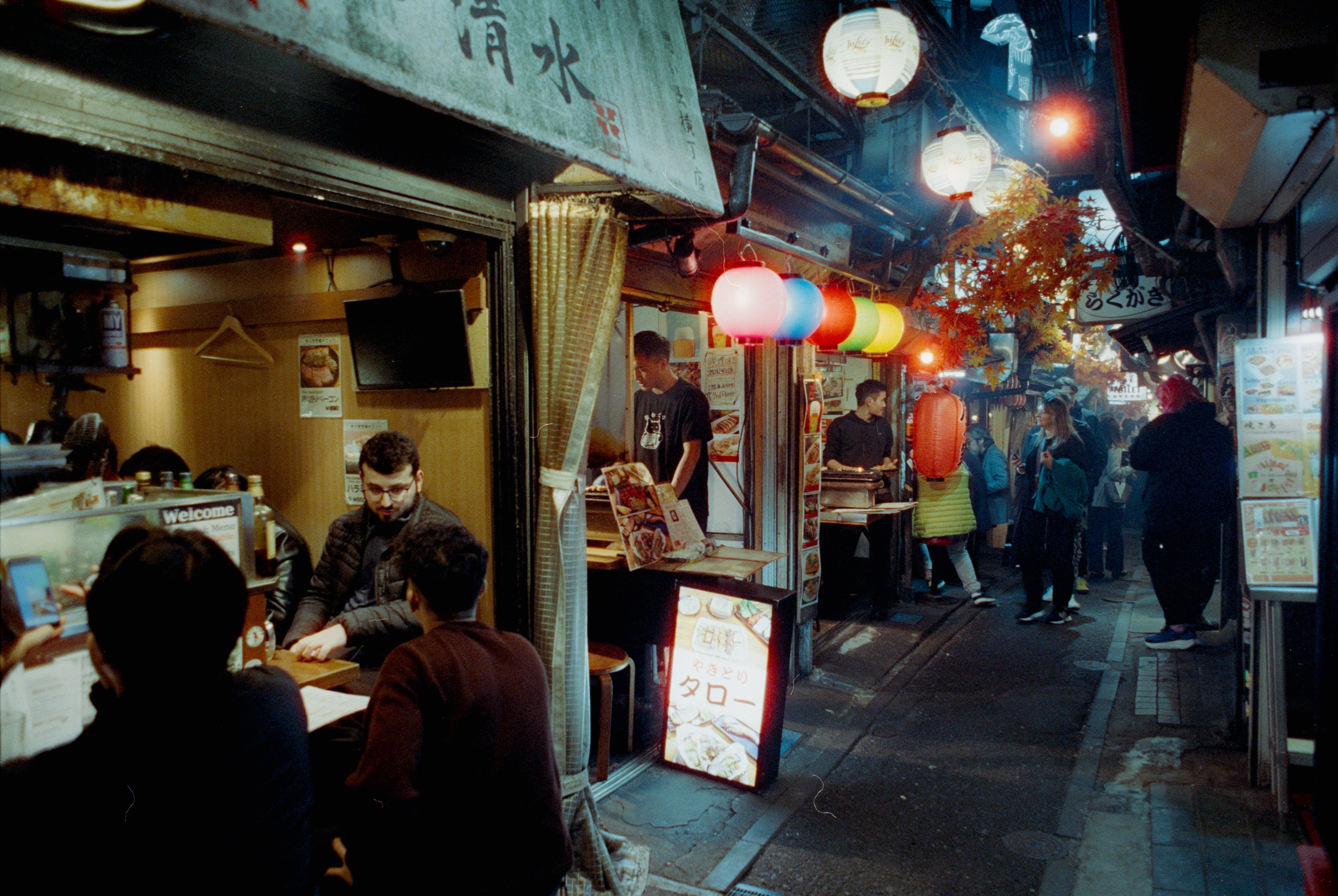
Put the torches and pitchforks down. All points heard. But CineStill 800T is one of the first films I really ever got comfortable with, so it’s always going to throw down in my book. I learned how to use C-41 chemistry with this film. I cut my developing teeth with it.
So this week, I’m going to take another non-scientific look at some images I recently grabbed, and see if I can point to just what it is about this emulsion that I like, why I feel like I can get away with it for many applications, as well as why I always seem to enjoy the outcome.
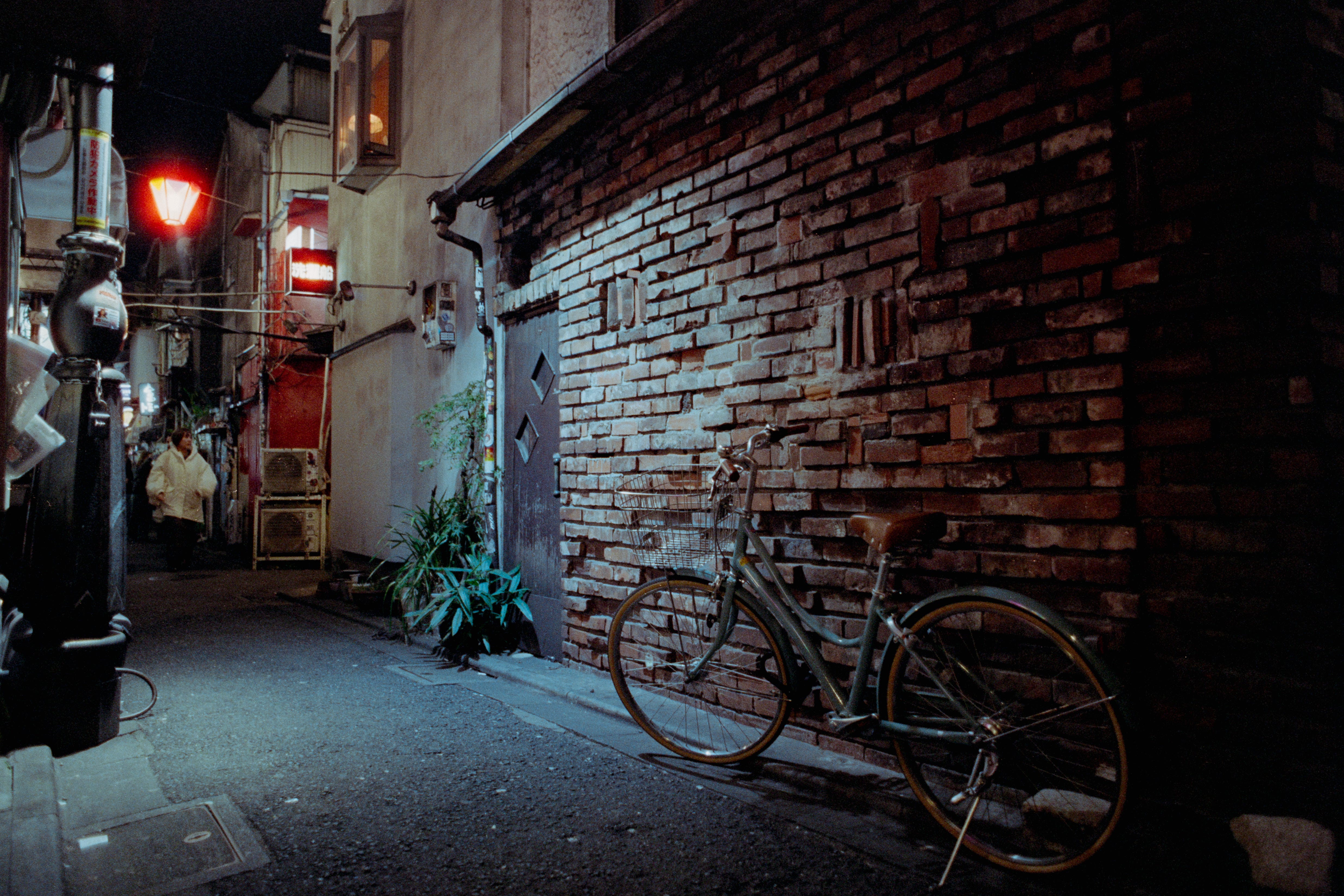
I think CineStill really shines in the grit of night. The film has this very specific character that captures the textures so often sought after with film, and I’m mostly out late in the evening when the light does strange things. It’s great for those dark, dingy locations that often call for a film that has a high speed rating, but also appears relatively clean. Despite being rated as an 800 speed film, the grain never seems too prominent. It seems to sit in the Goldilocks grain zone.
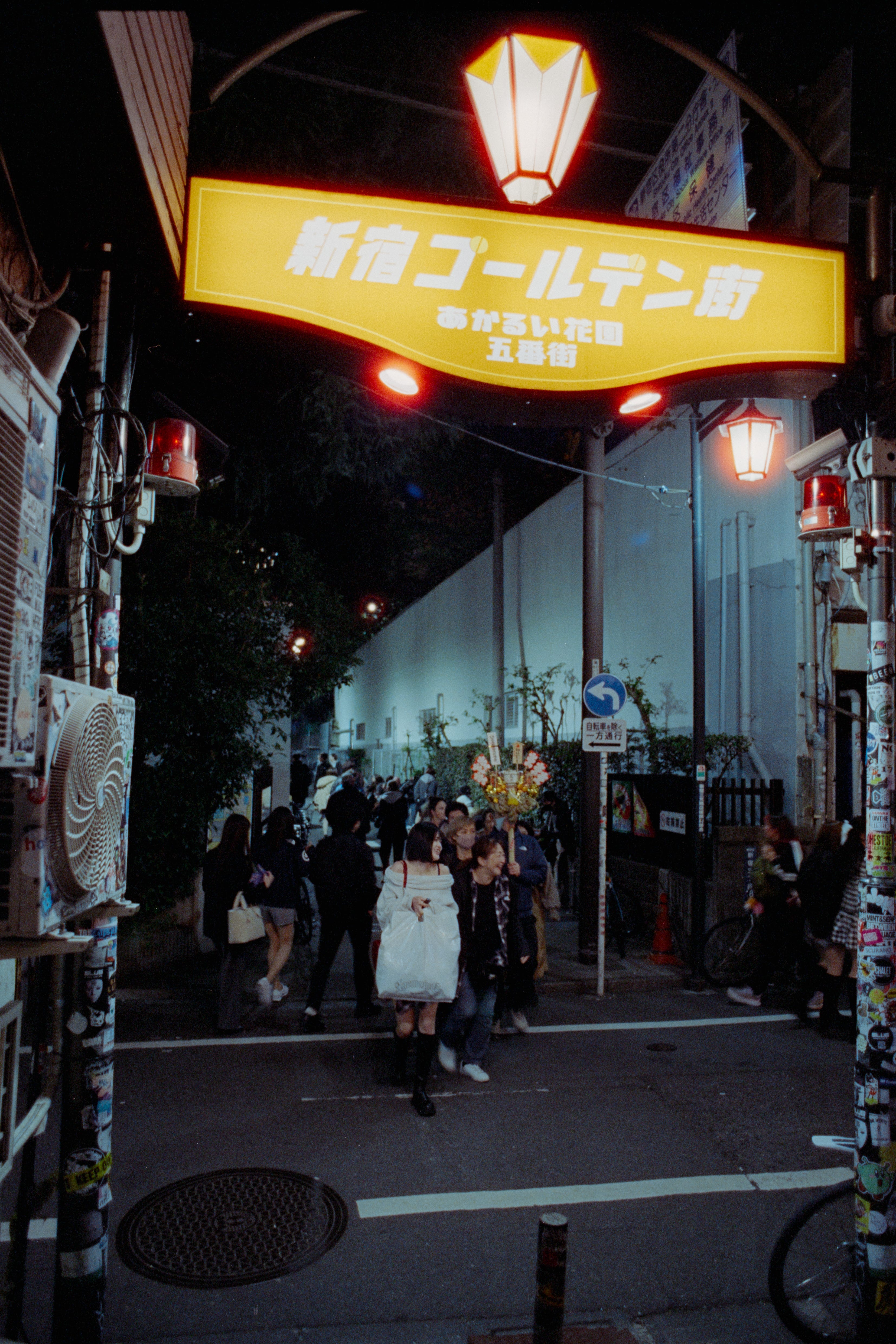
Another element I always find intriguing is its handling of artificial light. This is no surprise, as the film as designated as a tungsten calibrated film, hence the “T” in its name. Use it at night and you’re unlikely to be disappointed. I especially like the contrast between warm and cool artificial sources. I find it handles both delicately.
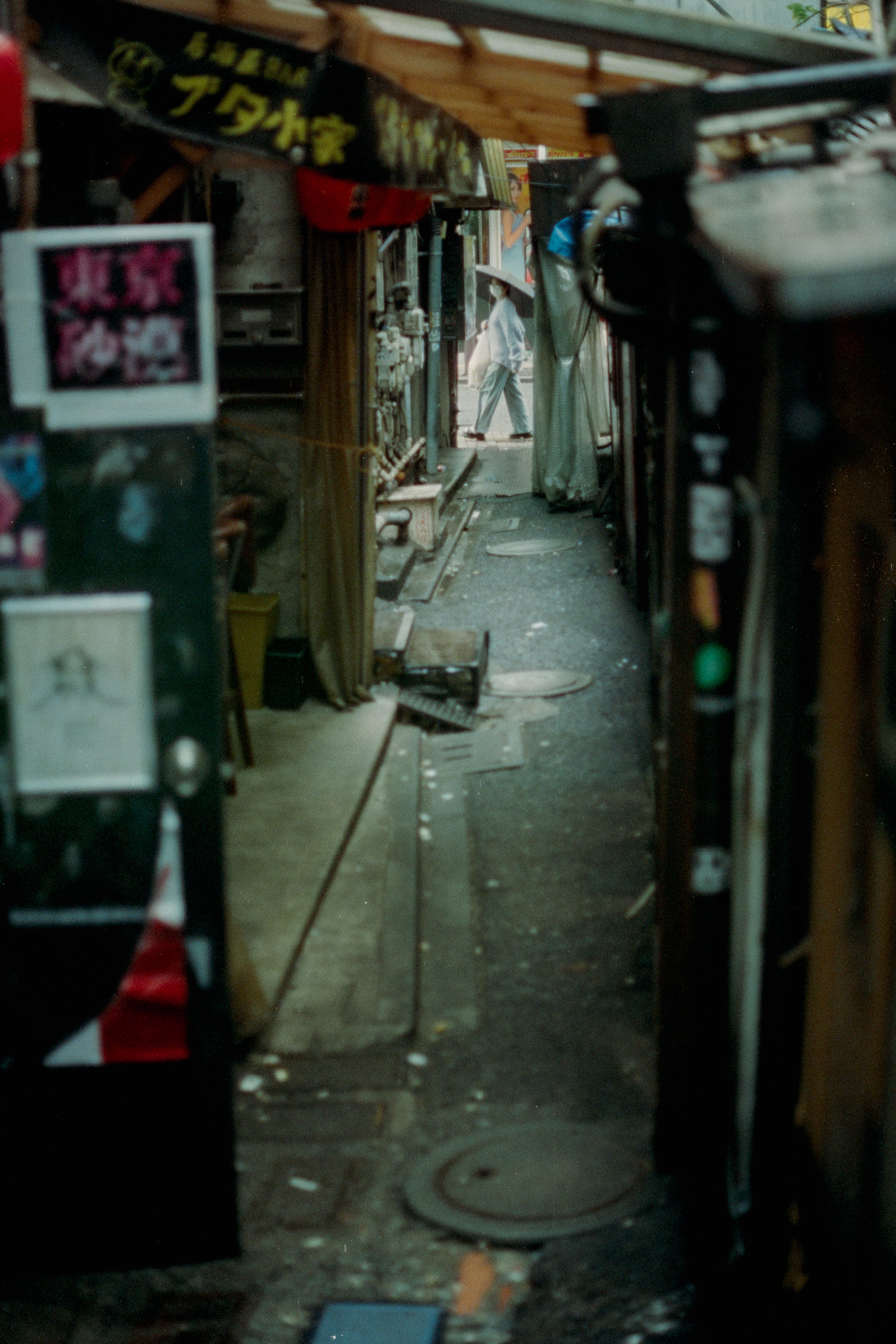
But don’t let the tungsten designation fool you. Traditionally, this is not a daylight film, but it actually performs quite well under the right conditions. I really like it in overcast settings. This film appears to swing to both the cool and warm temperatures with ease when used in those conditions, which gives some flexibility. It can go either way without losing character. Sometimes I grab my sliders and head into the orange territory, and sometimes I lean into blue.
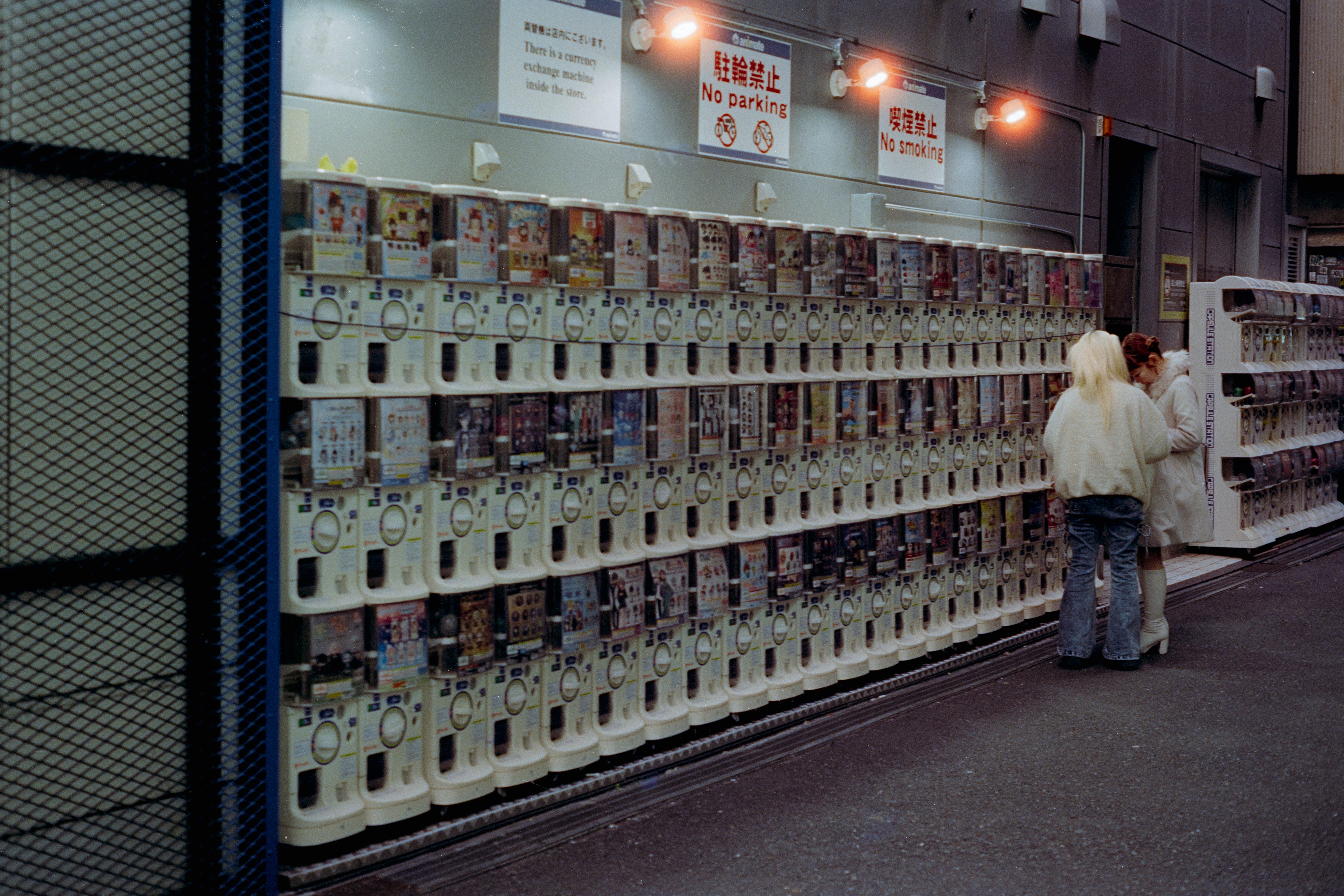
If you want to get really into the weeds, try different filters to see how it behaves. Sometimes I can’t even decide which temperature I want to commit to because I like both looks. Usually I’ll grab my white balance eyedropper tool and see what the middle ground is, then determine which way I want to lean if I’m looking to augment my work in any way.
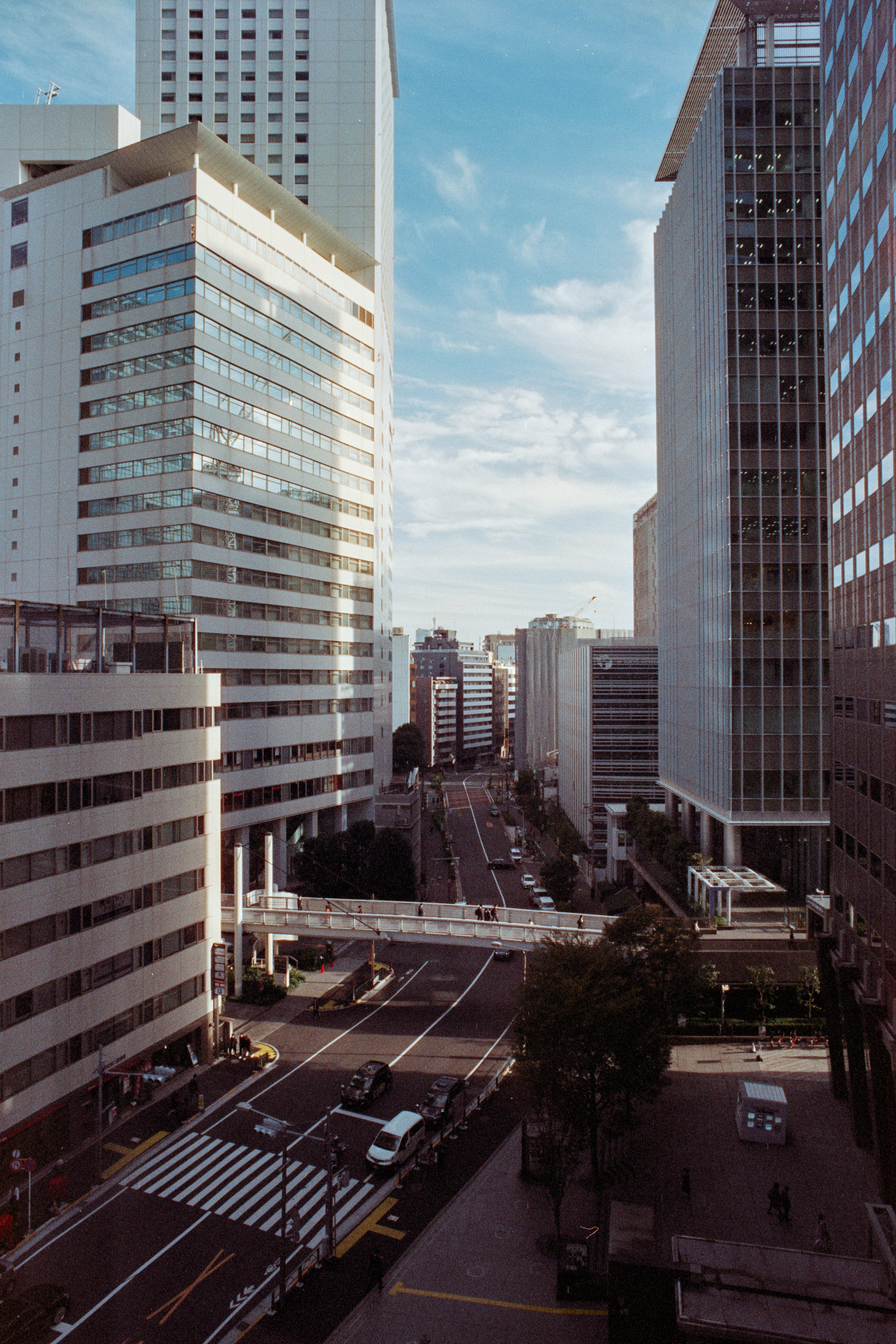
I also find that CineStill adjusts well when tweaking contrast. A flat image can be maintained if desired, or shifted into a stark range that leans well into bright highlights and deep shadows. I’m always surprised to find that I can get quite a bit of latitude out of this emulsion when I’m editing my work.
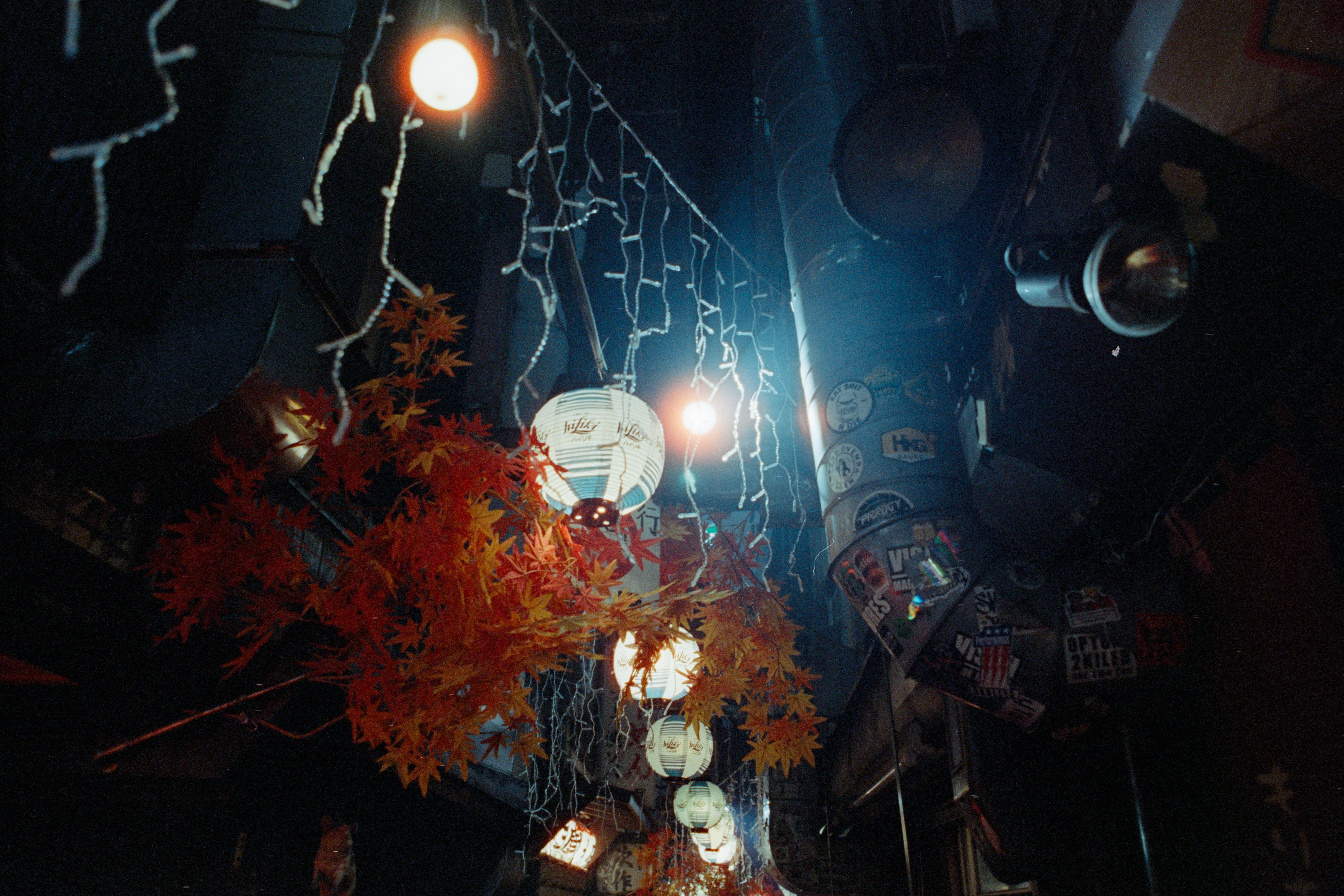
Most of the time in the past I’ve used CineStill 800T for long exposure work. I’ve always liked the way light behaves with this film, and the blacks of night seem to play well with the glow of movement from cars, trains, or anything that a long shutter enjoys. If you don’t overexpose your image too greatly, you can even minimize the halation effect.
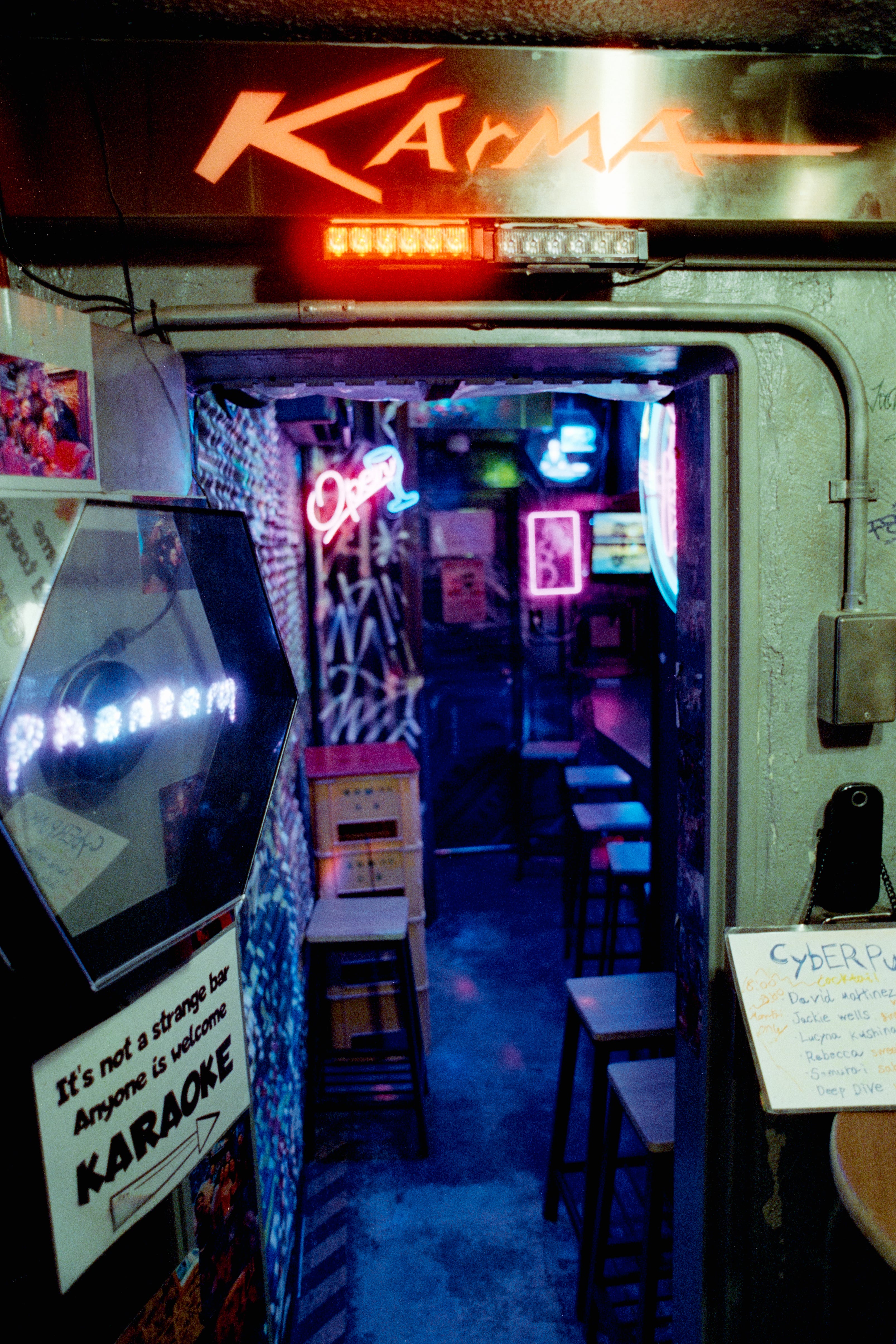
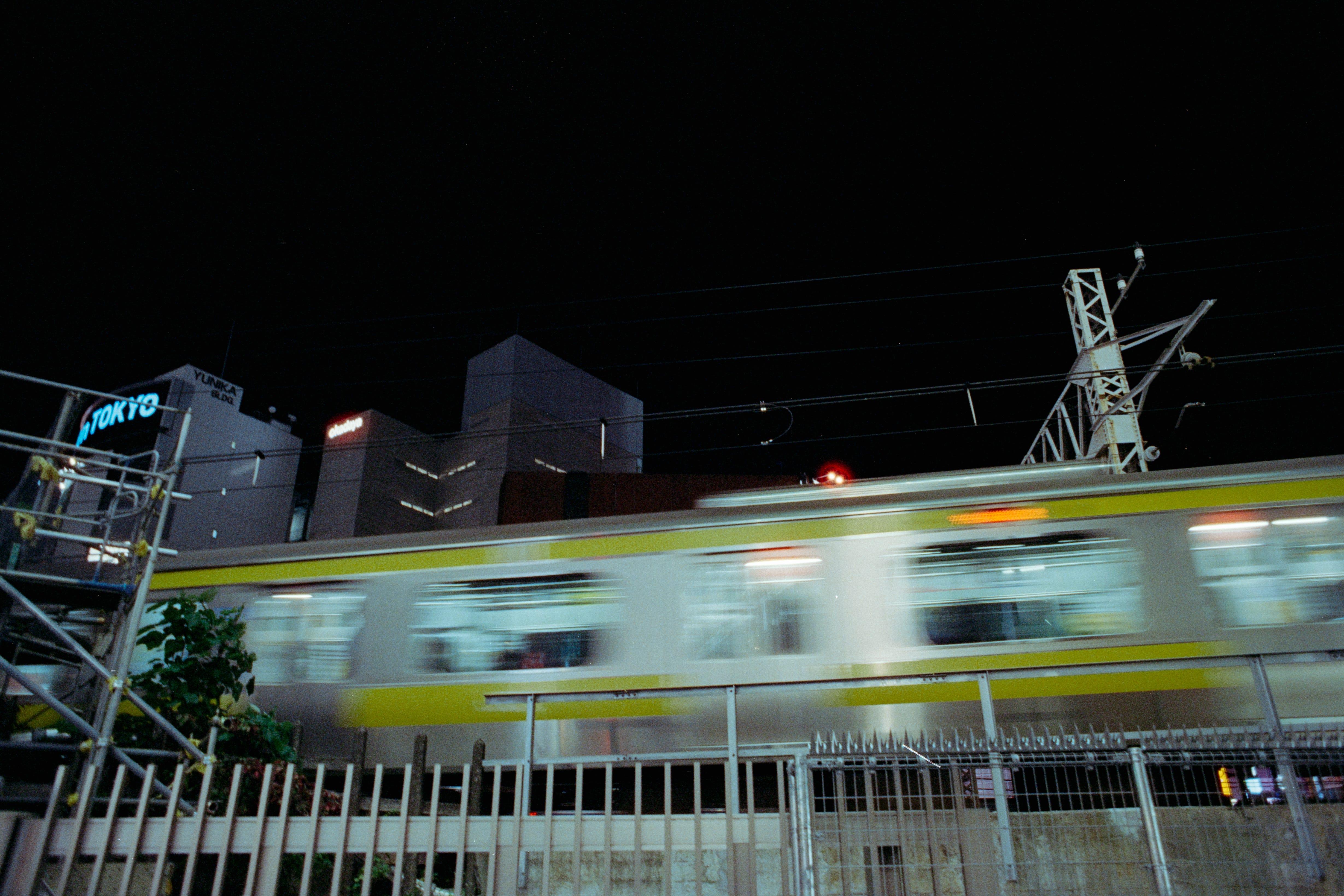
I really didn’t do any long exposure work with CineStill 800T while I was in Tokyo because I saved most of that for the slide films I brought, like Ektachrome, Velvia and Provia. I did, however, take one roll out at night and grab a few passing trains while bracing the camera for minimized shake. Luckily, the high speed rating gives me some wiggle room when adjusting for exposure to make sure I can capture some movement without a tripod. A good example can be found in this image of a train zooming by.
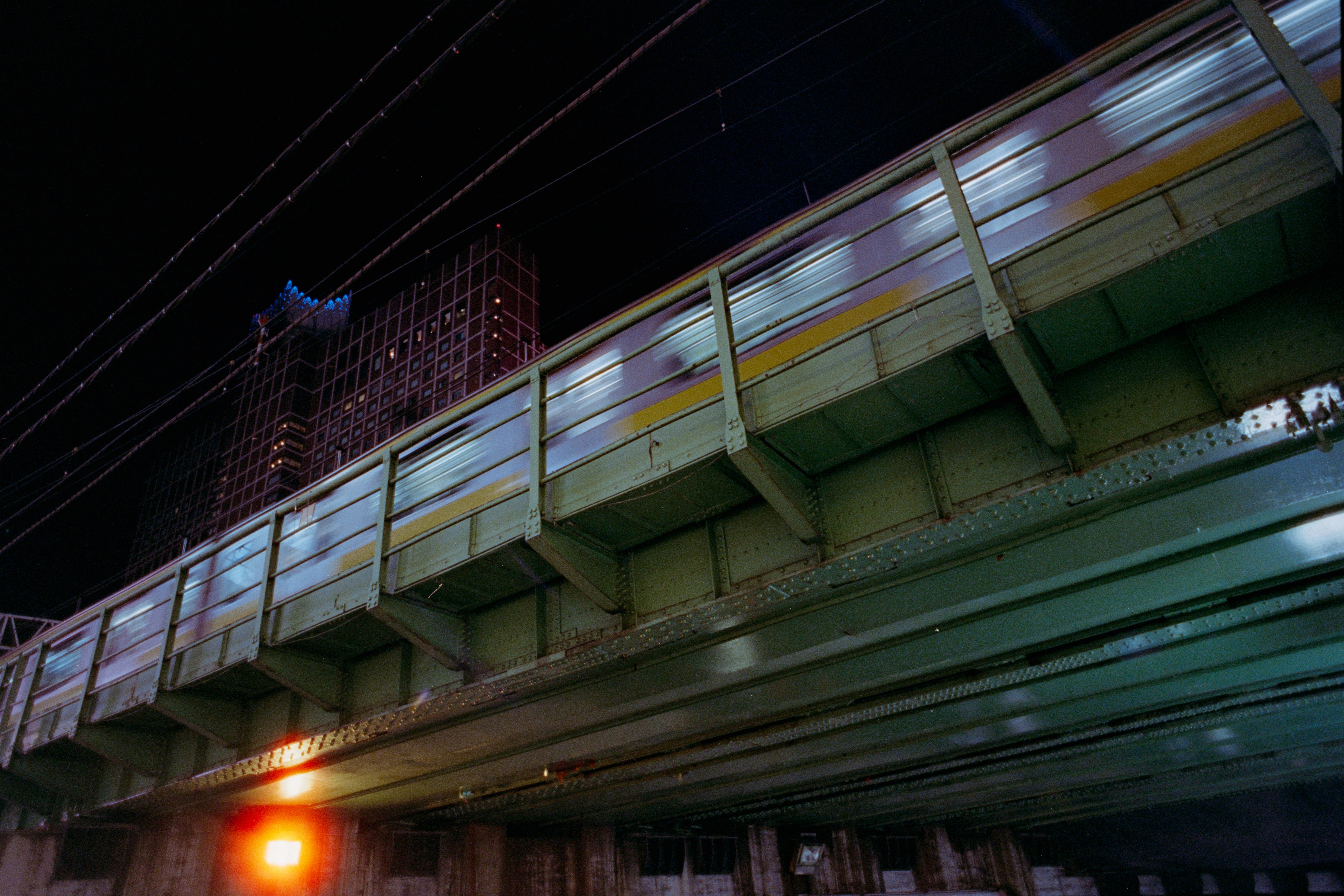
One of my favorite shots I pulled from the Paterson tank was this one below of a quick snack break, which isn’t necessarily impressive in any way, but feels like a true captured memory. In this image, I just snagged a memento of my plate of fried tofu and Asahi beer from an izakaya. It’s simple, and for someone that’s often messing with very technical photography like infrared and long exposure, freeing. It brings me back to the night in which I shot it.
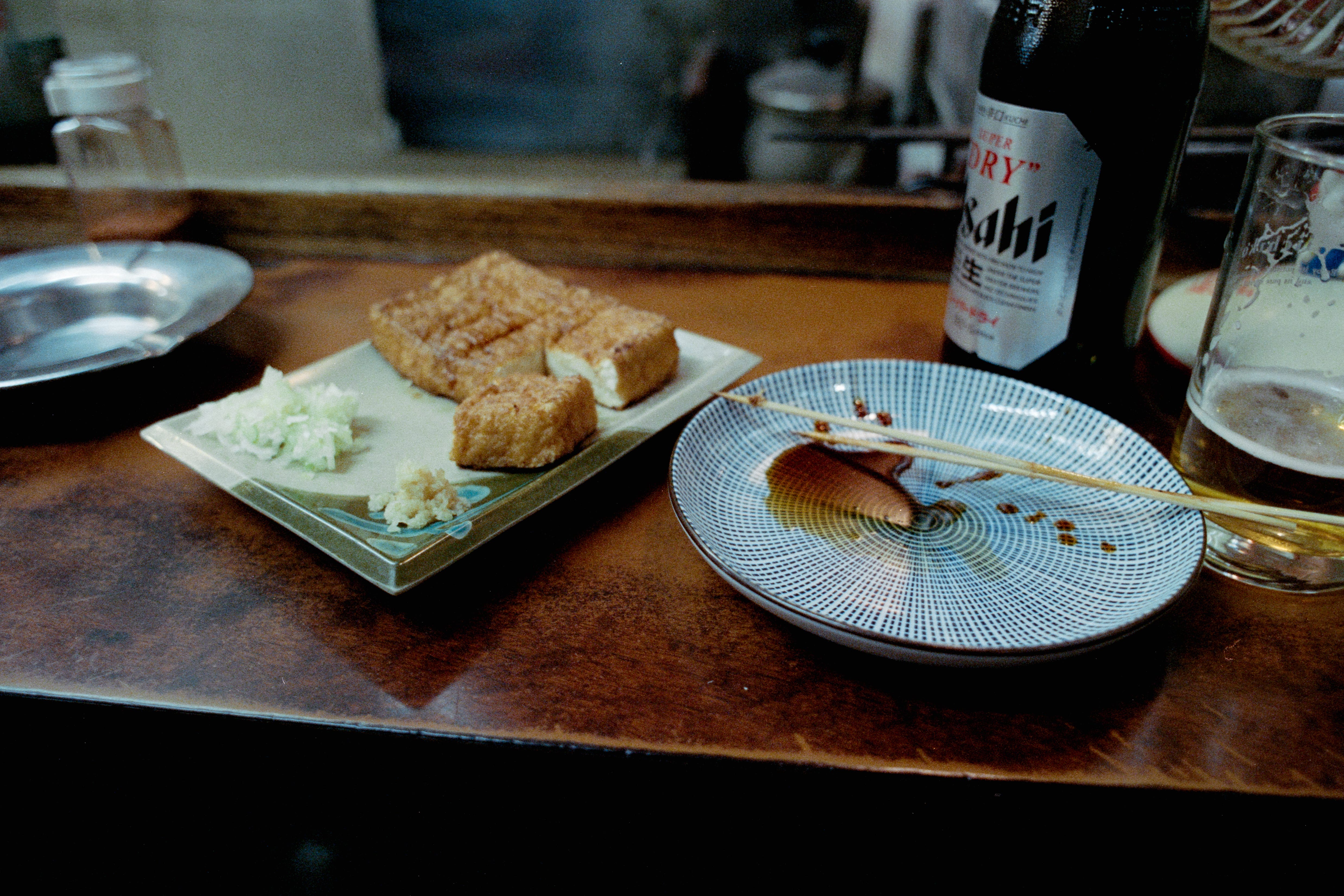
Let’s get to those halations. They’re one of the most notable characteristics of this film, rendering bright light sources and overexposed highlights with a foggy red intensity. They certainly have a “look.” They’re also a very unique clue that can point to the type of emulsion used for an image without otherwise noting it. It’s sort of like a dead giveaway, which isn’t a bad thing.
For some, the halation effect might be a nuisance. For others, a defining trait. I could understand how in certain situations this feature might even be distracting. In my opinion, halations are fun on occasion—not for use in all situations, but interesting for some.
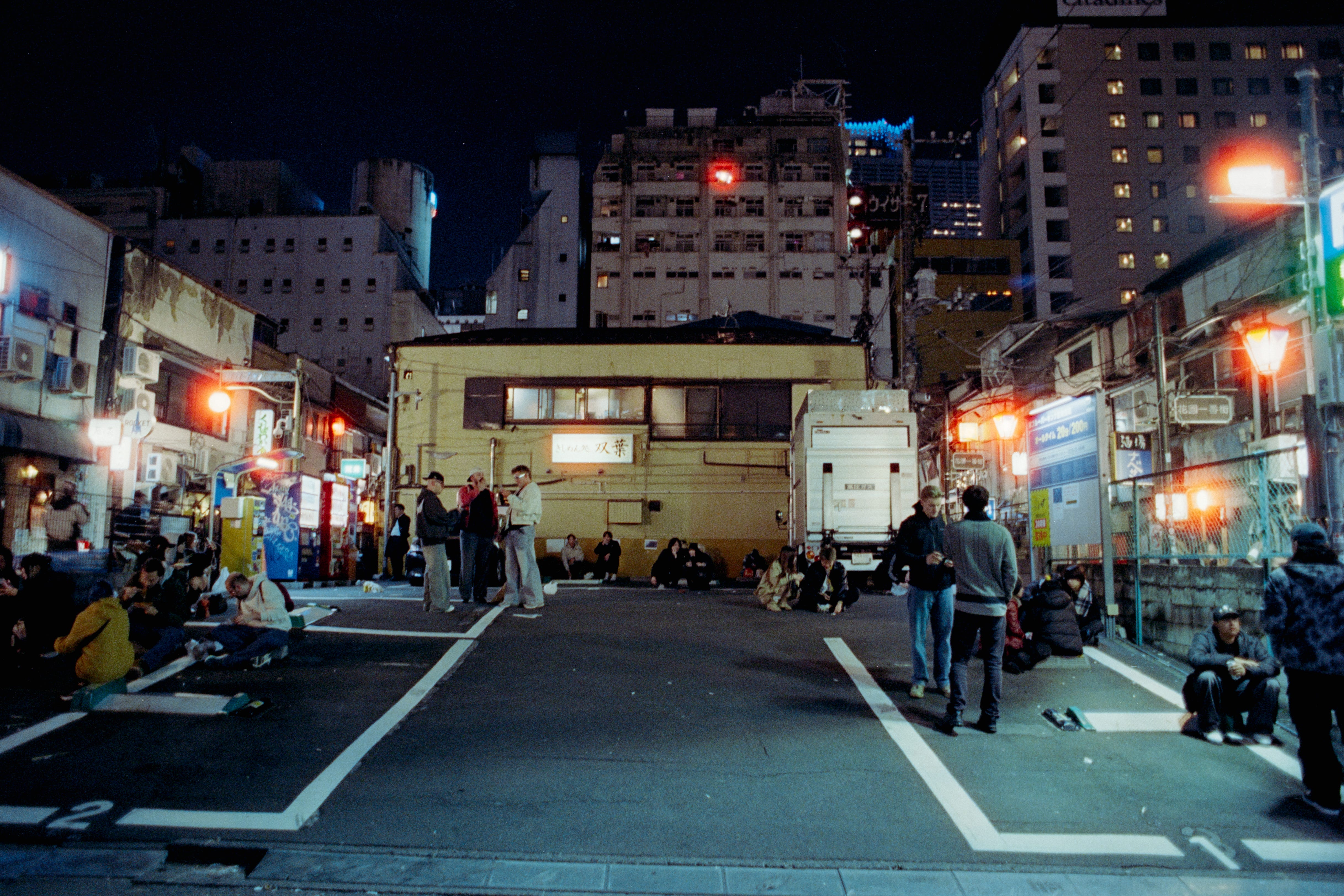
And as for that remjet layer? Get rid of it, I say. It’s cool to have an option. If I want it, I can have it. It’s available in other emulsions should I need it. I could always use Kodak Vision3, which maintains the remjet layer. Its absence in CineStill 800T makes developing this film in C-41 chemistry a cinch.
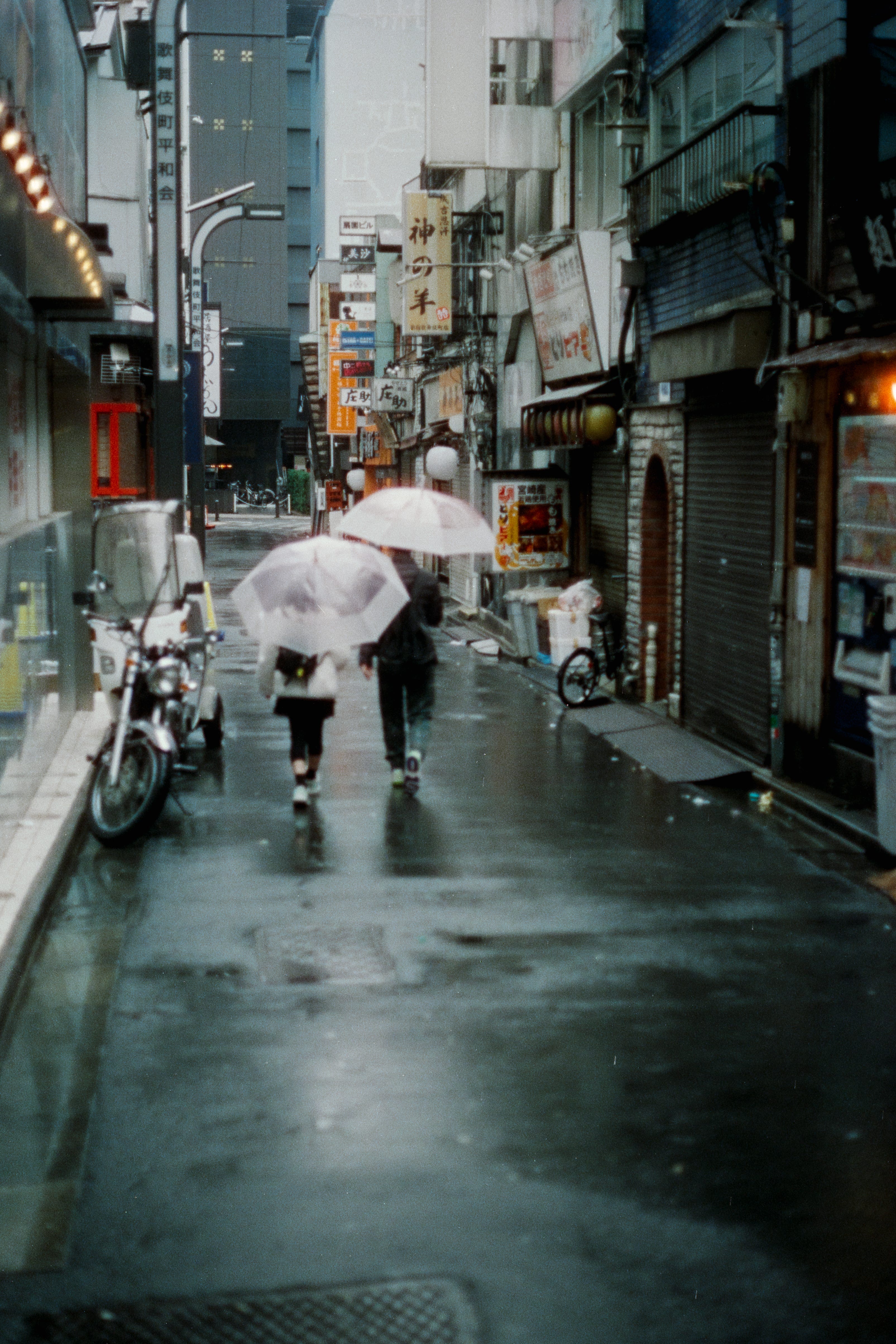
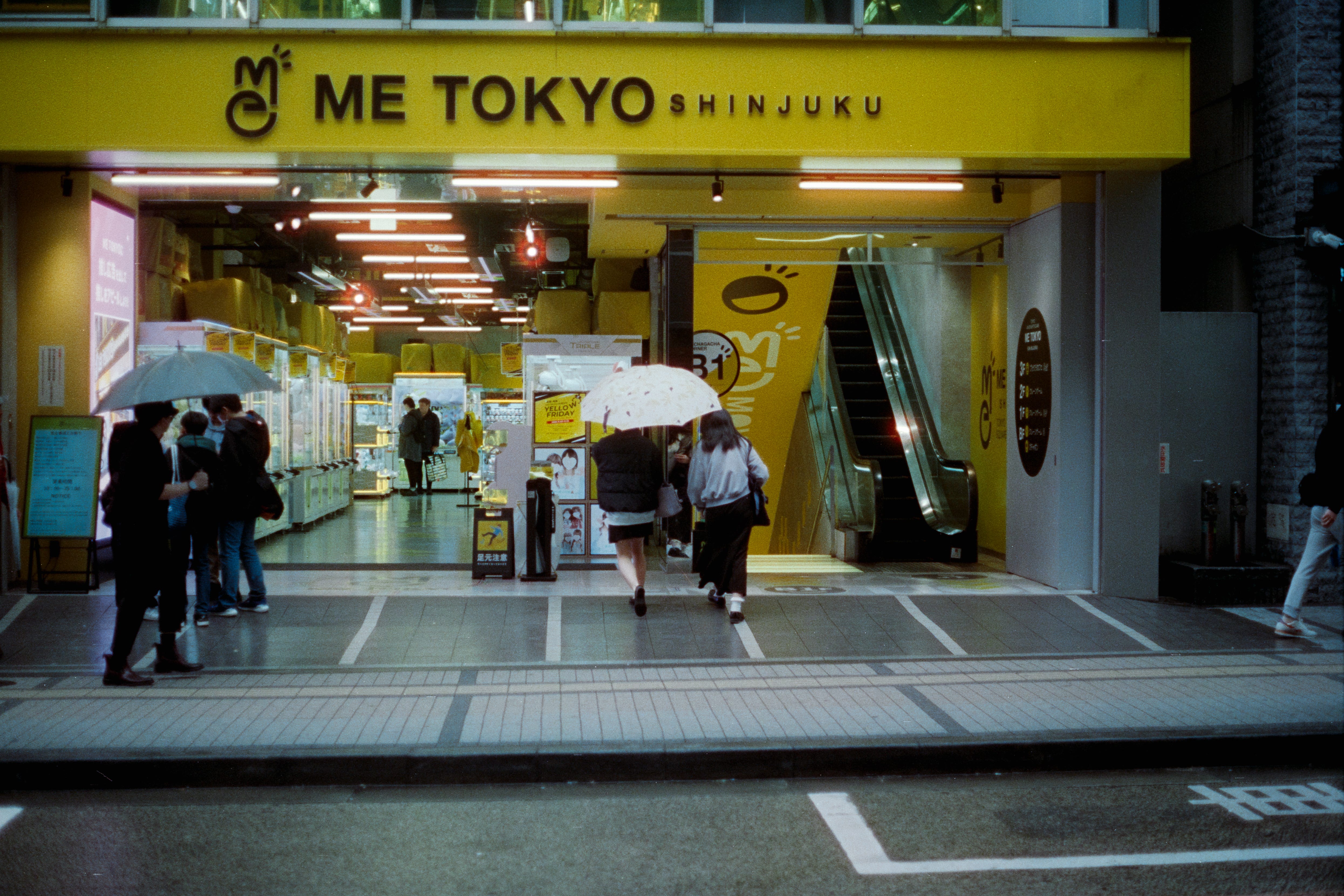
Even in daylight, that effect can still be captured in the highlights. It can be seen in the umbrellas in the above picture, a slight fringe around the edges of the white tones.
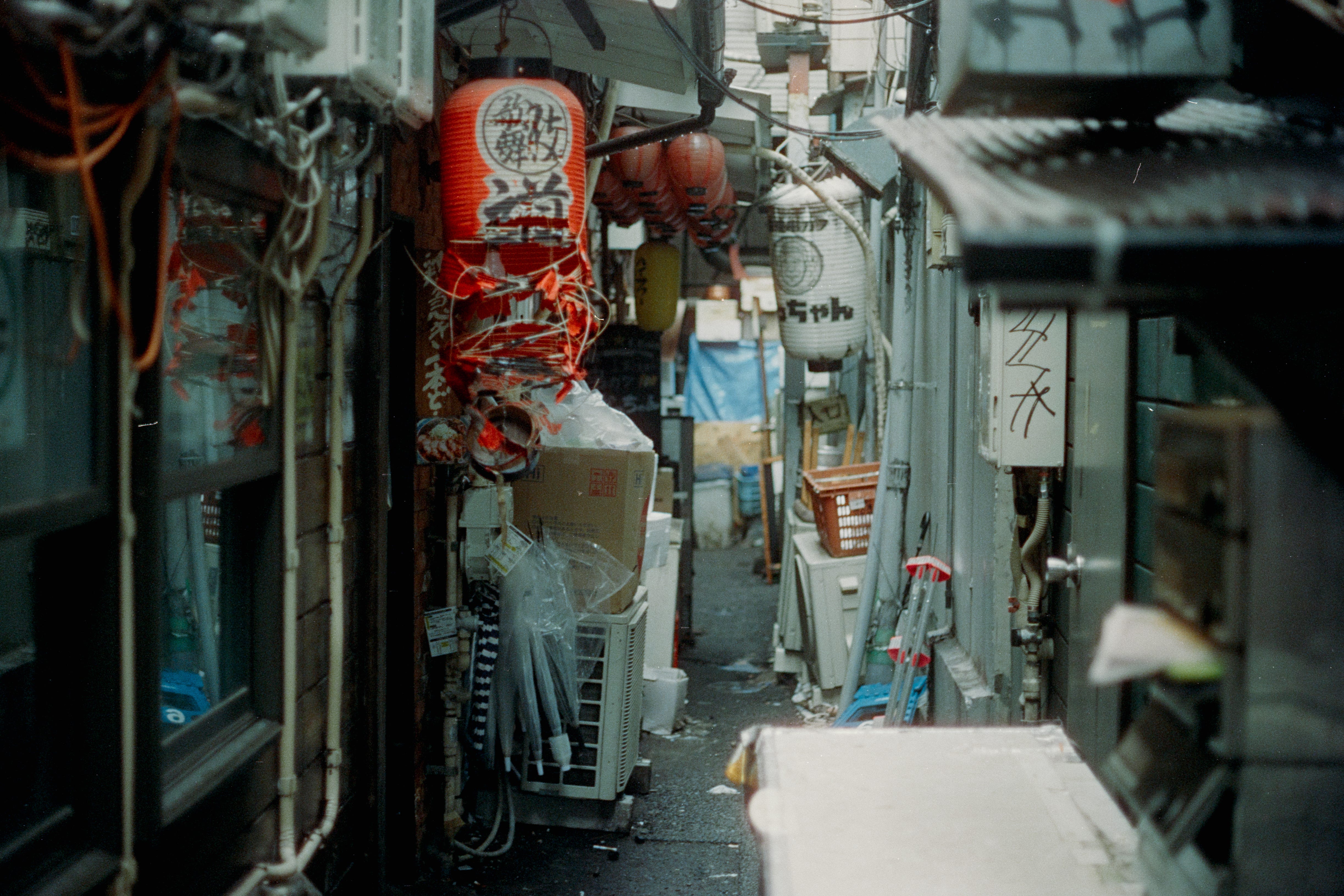
I like how using CineStill 800T in the daylight hours offers a slightly muted color pallet. The above image almost looks like it’s had a slight bleach bypass. Of course, this image was also taken on an overcast day, but I find the film lacks the punch of other daylight color films. Again, this may be due to some of my own processing technique, but I like it regardless.
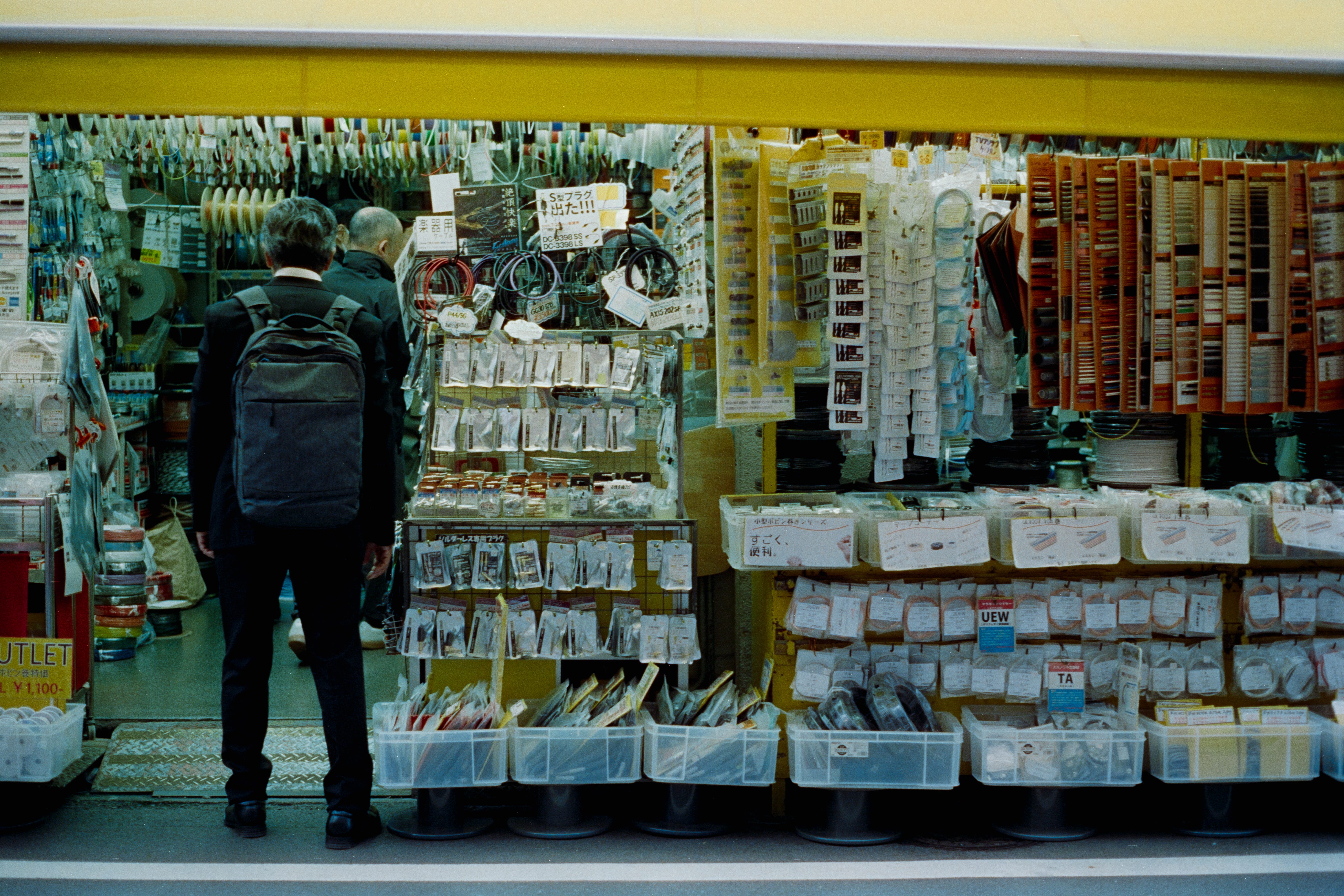
I find that I always have a spare roll of CineStill 800T in my drawer. I never leave home without it. I keep one on standby in my camera bag. When I stop at the photo store, I always throw a roll in with the rest of my purchases. It’s reliable and versatile, and that’s what I like most about it, just like that old sweatshirt.
What are your thoughts on CineStill 800T? Solid, fun film with unique character, or one-trick pony? I’d love to know. Thanks for reading.
I only shot any Cinestill for the first time while in Tokyo last year. I love my images from both the 800T and 400D, I only shot the 800 at night but I shot other rolls of respooled 800 during the day and I loved the look. The 400D is the sweet spot for me though.
Great photos and I love a less technical/more personal take you provided.